Whether you are an art lover seeking the soul of Cornwall, a cultural traveler drawn to the coast, or simply curious about the stories behind the sands, step into Cornwall at dawn watching the sunlight dances across sweeping sands and turquoise waves. This is the world John Miller captured on canvas.
As one of Cornwall’s most beloved contemporary artists, he is known for channeling the essence of the beach in Lelant, St.Ives into a radiant, distinctive vision of light, serenity, and timeless summer days. His art transports viewers to the heart of the Cornish coast.
Renowned for his seascapes and beach scenes, Miller lived and painted at Beach Pads in the picturesque village of Lelant, near St Ives, for much of his career. This deep connection with Lelant shaped both the content and the spirit of his art, setting the stage for his artistic journey.
What is it about Porthkidney Beach on the St. Ives Bay—its landscape, the light and its atmosphere —that so profoundly shaped John Miller’s artistic vision, and how did his art in turn transform how Cornwall is seen and remembered?
Miller’s life, artistic journey, techniques, themes, influence, and legacy are inextricably linked to Porthkidney Beach in Lelant within the Parish of St. Ives, and Cornwall.

Early Life and Artistic Beginnings
John Miller was born in 1931 in London. From an early age, he demonstrated an interest in art, encouraged by his family and teachers. Miller’s formal education included time at St Martin’s School of Art and the Royal College of Art, where he was exposed to a range of artistic traditions and philosophies. However, a turning point came with his move to Cornwall, which truly shaped his creative trajectory. Leaving behind the grey city skies, the rumble of buses, and the smoky tang of post-war London air, Miller was immediately struck by the salt-fresh breeze and the dazzling clarity of Cornish sunlight.
Arriving in Cornwall in the 1950s with his long-time friend, colleague and partner Michael Truscott, John’s architectural skills were immediately put to use in the re-design and adaptations made to the Newlyn Art Gallery. His style in painting changed dramatically over time, from early figurative landscapes of great beauty and detail to later abstract sea and landscapes of vivid blocks of colour depicting the horizon where the sea meets the sky.
Drawn to the region’s distinctive light and rugged landscapes, he settled in Lelant, a small village perched on the Hayle Estuary, just west of St Ives. Lelant, with its large expanse of golden sands, sweeping dunes, and proximity to both countryside and coast, offered Miller both inspiration and sanctuary. The village’s tranquil atmosphere and the ever-changing seascapes became central motifs in his artistic vision. As Margaret Treloar, a local resident, observed, “John’s paintings captured the Lelant I know by heart—the quiet, the brightness, the sense of belonging to a close-knit place. Each canvas felt like a memory from our own daily lives.” This firsthand perspective highlights how Miller’s art was impacted by living on the beach in Lelant.
https://thomashenrygallery.com/artist/john-miller/
Artistic Development and Style
Miller’s early works reflected his academic training, with a command of draughtsmanship and interest in landscape and figure painting. As he immersed himself in the Cornish environment, his style evolved. Influenced by the St Ives School, where artists like Ben Nicholson, Barbara Hepworth, and Peter Lanyon experimented with abstraction and modernism, Miller absorbed lessons about colour, form, and expressive possibilities. He uniquely fused Cornish light and tranquil beaches with a contemplative, memory-infused atmosphere—inviting viewers to step inside a personal sense of serenity and belonging, unlike other St Ives artists.
By the late 1970s and early 1980s, Miller had begun to develop the distinctive style that would make him famous. His paintings became more luminous, focusing on light, shadow, and the gentle interplay of colour. The hallmark of Miller’s mature work is the portrayal of sweeping beaches, sunlit skies, and calm, turquoise seas. Figures—often children or solitary walkers—appear as small, distant silhouettes, evoking memories of idyllic summer days.
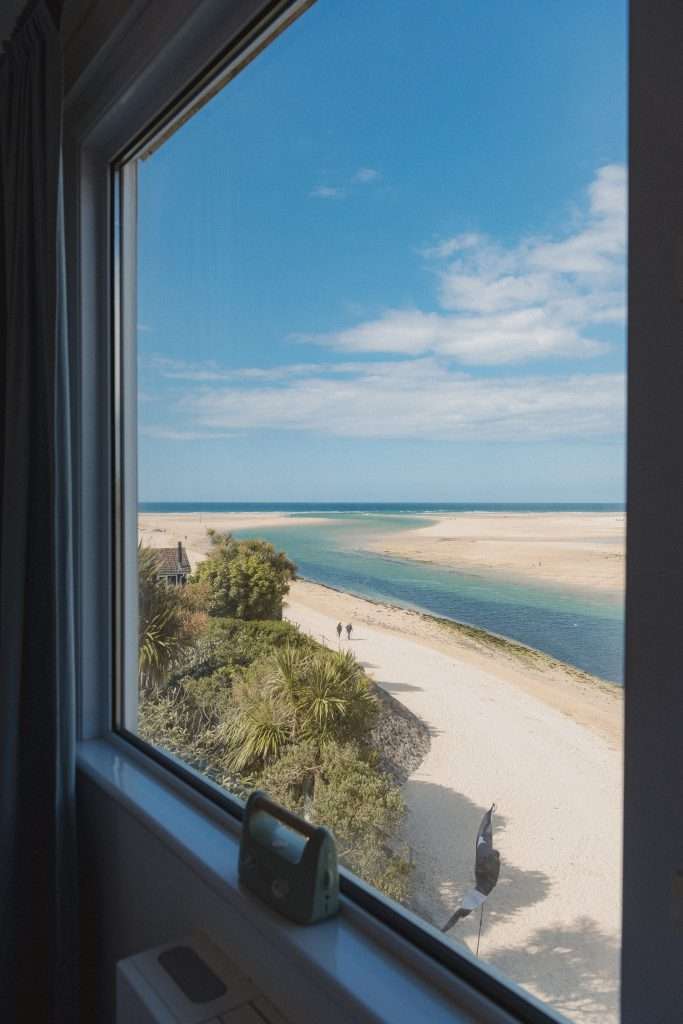
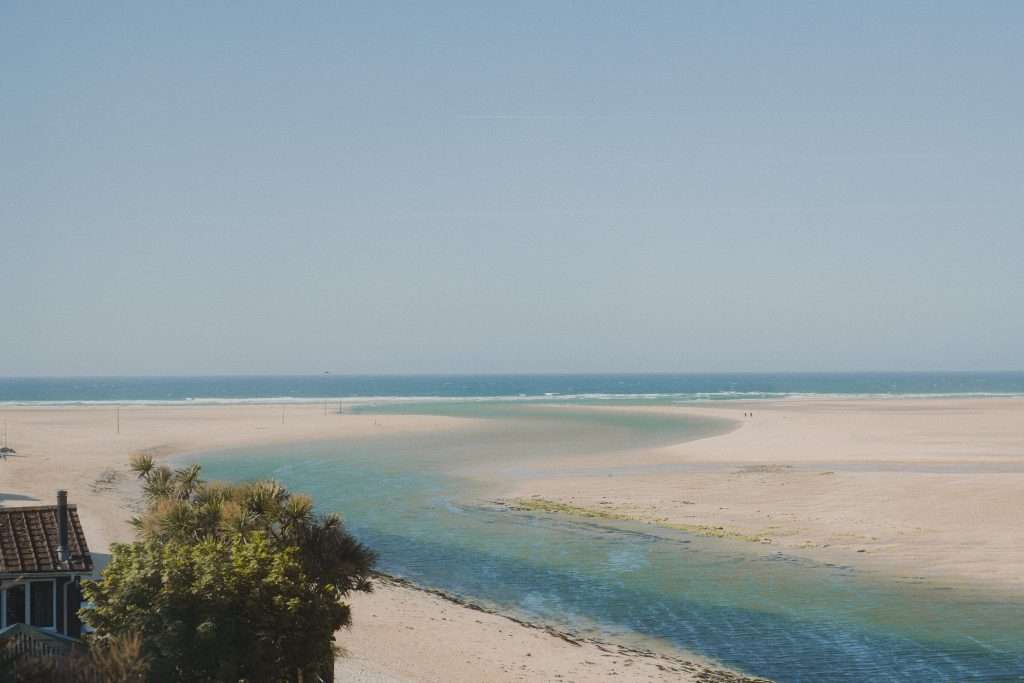
The characteristic palette of Miller’s paintings includes soft blues, warm ochres, pale yellows, and shimmering whites. Among these, a standout shade he often returned to is what locals now fondly call “Hayle Azure”—a luminous, clear blue inspired by the estuary waters at Lelant. Seen right outside his windows at The beach house and Ferryman’s Rest where he lived and where he was immersed in the magnetism of the sea views. Miller’s technique involves delicate layering of paint, subtle gradations, and careful attention to atmosphere. The result is a dreamlike quality; his beaches seem suspended between reality and memory, inviting viewers to lose themselves in the scene.

Life and Work in Lelant
Lelant was more than a backdrop; it was central to Miller’s art. He lived in Ferryman’s Rest and painted next door in The Beach House both overlooking Porthkidney Sands, painting daily and drawing inspiration from changing tides, weather, and light. Miller kept to a steady routine: each morning, he would rise with the first light, sipping tea as he gazed out across the estuary to judge the day’s atmosphere. Regardless of the season or mood of the sky, he began painting by 8 a.m., his easel always angled toward the window to capture the subtle shifts of sun and cloud over the sand. Occasionally, he made a quick note in his journal—”Mist rolling over St Ives Bay, the sea glass green and silver this morning”—before losing himself in brushwork until midday. The rhythms of village life, solitude of the dunes, and sweeping views across St Ives Bay all shaped his art.
Miller’s connection to Lelant was personal. He became part of the community, supporting local causes and welcoming visitors to his studio. He believed in the importance of place, and his paintings carry an undercurrent of love for Lelant’s landscapes and people. He painted many of the fishing and crab boats that passed the houses on their way out to sea.
John le Carre (David Cornwell)
An intriguing dimension to Miller’s life in Lelant was his deep and enduring friendship with the celebrated novelist John le Carré (David Cornwell), who also had a home in Cornwall. The bond between Miller and Cornwell went well beyond casual acquaintance; it was rooted in genuine affection, shared values, and a profound respect for each other’s craft. Both men,celebrated in their fields, found inspiration in the Cornish landscape and often engaged in reflective conversations about art, literature, and the qualities of life by the sea.
Their creative understanding is revealed in a single exchange as the light faded across St Ives Bay. Miller once said, “Every time I try to catch this gold on canvas, it slips away—like memory itself.”
Cornwell smiled and replied, “That is why we write and paint, John—always chasing what the light leaves behind.” This brief dialogue distilled the spirit of their friendship, capturing the shared pursuit that linked their work and deepened their connection to Cornwall.
Cornwell was a frequent visitor to Miller on the beach in Lelant, where their friendship became woven into daily rituals of discussion and creative exchange. They would often spend long afternoons on the patio talking about their respective projects, with Cornwell sometimes reading drafts of his latest work and Miller sharing new sketches or canvases. The serene environment of Beach Pads, infused with Miller’s artistic vision, provided a perfect backdrop for these wide-ranging conversations, which ranged from the technicalities of painting and writing to philosophical musings on the nature of inspiration. Occasionally, they would walk together along the beach, drawing further inspiration from the ever-changing Cornish light and space. Visitors and locals sometimes recall seeing Miller and le Carré in thoughtful conversation along the coastal paths, a testament to the creative synergy and emotional depth that flourished in this remote yet inspiring corner of England.
John Miller is best described by David Cornwell, in his funeral address for his best friend Miller, (Penzance in August 2002). David Cornwell said that a line of books could not cover the lives his very old and very dear friend had led. What hope, then, for this brief memorial tribute? The crowded funeral congregation who had come to mourn a popular painter hailed simply as “the Cornish Monet”. Incarnations of the deceased had run to special soldier, restaurateur, actor, antiques dealer and architect: but “always, eternally, artist”. In that abiding creative calling he had been a master and a mystic – a visionary offering glimpses of the infinite.
In life as in art, so to complete the outline of a fair but very complex portrait. The Cornwell/Le Carré eulogy insisted that a string of biographical volumes aiming to do justice to his late great friend would not include a single dishonourable page. And he concluded: “We shallnever know a better man than John Miller – or a happier one.”
https://s3-eu-west-1.amazonaws.com/messums/cat_pdfs/John_Miller_2021_COMPLETE.pdf
Themes and Motifs
At the heart of Miller’s artistic vision lies a sense of quiet transcendence—a deep appreciation for the serene and the timeless in the Cornish landscape. Rather than simply cataloging elements of the coastal environment, Miller’s repeated motifs coalesce to invite viewers into a meditative space, where the boundaries between nature, memory, and emotion become softly blurred.
Beaches and Seascapes: Miller’s enduring fascination with the long, sweeping beaches of Lelant, Carbis Bay, and St Ives reveals his quest to capture spaces where land meets sea and sky. These expanses offer a sense of openness and peace, allowing viewers to lose themselves in reflective calm. The tide-washed sands and gently shifting shorelines evoke both a sense of place and a longing for something beyond the immediate world.
Light and Atmosphere: In Miller’s paintings, the famous Cornish light is almost a presence in itself. His delicate rendering of the changing sky—glowing with afternoon warmth or dawn’s cool promise—becomes a metaphor for fleeting moments of clarity and grace. The luminous quality of his canvases invites viewers to pause, to notice light as both subject and feeling, and to dwell in the sensation of a perfect summer day.
Solitude and Reflection: The lone figures or small groups inhabiting Miller’s landscapes are dwarfed by the immensity around them, underscoring introspection and the enriching solitude of nature. This motif speaks to the human desire for quiet contemplation and the way the coast can provide solace and space for inward thought.
Timelessness: By excluding overt signs of modern life—no vehicles, power lines, or bustling crowds—Miller’s work fosters a sense of timelessness. Here, the world is pared down to essentials: sand, water, sky, and light. This quality enhances the transcendence his paintings offer, suggesting a universal refuge free from distraction, where viewers can reconnect with a sense of simplicity and possibility.
Technique and Process
Miller’s artistic process was both disciplined and intuitive. He often worked from sketches and photographs taken during walks along the beach, but his paintings were created in the studio at The Beach House.
He would begin with a carefully composed underdrawing, establishing the scene’s basic structure and proportions. Next came the layering of colour—thin washes of oil or acrylic paint, gradually built up to create depth and luminosity. This careful attention to the gradation between sky and sea was more than a matter of technique; Miller sought to evoke a sense of calm, expansiveness, and reflection in the viewer. The seamless blending of tones was intended to draw observers into a tranquil, almost meditative state, mirroring the peaceful solitude of the Cornish coast. Through his method, Miller translated his emotional response to the landscape into a visual experience, inviting others to feel the serenity and timelessness that inspired him.
Miller paid particular attention to the gradation of sky and sea, aiming to create a seamless transition of tone and colour. He used soft brushes and blending techniques to achieve this effect, often reworking areas until the desired balance was achieved. His figures, though small, were painted with sensitivity, suggesting movement and emotion with minimal detail.
Religious Beliefs and Work
While John Miller is celebrated primarily for his luminous beach scenes and evocative landscapes, a significant yet sometimes overlooked dimension of his life and work was his Christian faith. Miller was a deeply spiritual individual, and his beliefs subtly informed both his personal philosophy and his artistic output. Raised in the Church of England, he maintained a lifelong interest in religious themes and spiritual exploration.
Miller’s religious convictions found direct expression in several notable commissions for Churches in Cornwall and beyond.
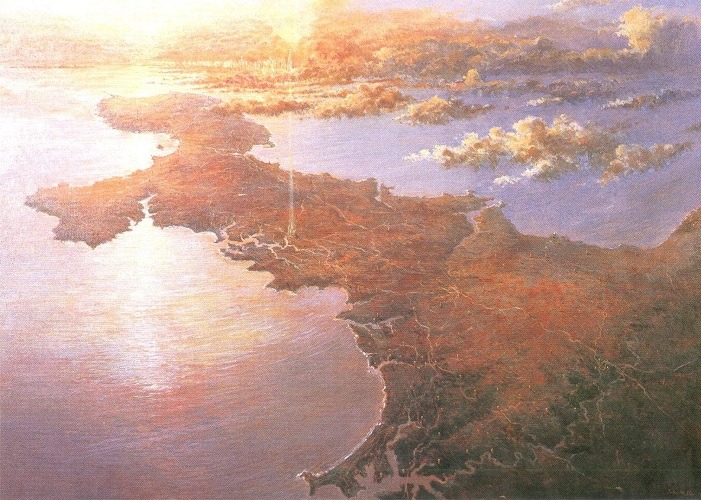
Among his most prominent religious achievements was his participation in the creation of “Cornwall: A Land of Saints” at Truro Cathedral. This major project celebrated Cornwall’s spiritual heritage and its many saints, with Miller contributing paintings and visual concepts that honoured the region’s unique religious legacy. His work for the cathedral was widely praised for its luminous palette and for connecting contemporary worshippers to the ancient spiritual roots of Cornwall.
In his more secular paintings, the influence of Miller’s faith is less explicit but no less profound. The tranquility, sense of wonder, and quiet transcendence that define his seascapes often reflect a meditative, almost prayerful approach to the world. Miller spoke occasionally of finding the divine in nature, describing the Cornish light as “a daily miracle” and the changing tides as reminders of renewal and hope. Friends and colleagues have remarked that time spent with Miller— whether in conversation or in his studio—often felt contemplative, as if he was seeking to translate not just the visual but also the spiritual qualities of his surroundings onto canvas.
This spiritual dimension adds a further layer of meaning to Miller’s legacy. For many viewers, his paintings offer not only aesthetic pleasure but also a quiet invitation to reflection, gratitude, and a sense of connection to something greater than oneself.
Altruism
John Miller was a kind and generous patron to many good causes, frequently supporting Museums, Churches and Schools by the donation of paintings that could be auctioned, raffled or sold on behalf of the relevant mission. Taking an essentially religious perspective on life, John played a significant pastoral role in Anglican activities in Cornwall in later years.
An extensive collection of his work was donated by his estate, after his death in 2002, to be housed in the Sunrise Centre at Royal Cornwall Hospital, Truro.
John was a lay canon at Truro Cathedral, and the creator of the large mural painting there: Cornubia-Land of the Saints. In this painting he included every (mediaeval?) Cornish Church as a shaft of light falling on it – the larger shaft of light is Truro Cathedral where you can see the original painting in all it’s glory.
https://sconetherapy.blogspot.com/2014/11/land-of-saints.html
Miller’s lifelong commitment to faith and service was also recognized outside the world of art. He was a dedicated member of the Order of St John, an ancient order devoted to humanitarian and charitable work. Through his association with the Order, Miller contributed to a range of causes supporting health and welfare in Cornwall and beyond. This honour reflected not only his spiritual convictions but also his practical dedication to helping others—a quality evident in both his private life and his public work.
St. Francis: His deep spiritual being is reflected in the inspiration for works such as his painting of St Francis Assisi “Brother Sun” and “Sister Moon”
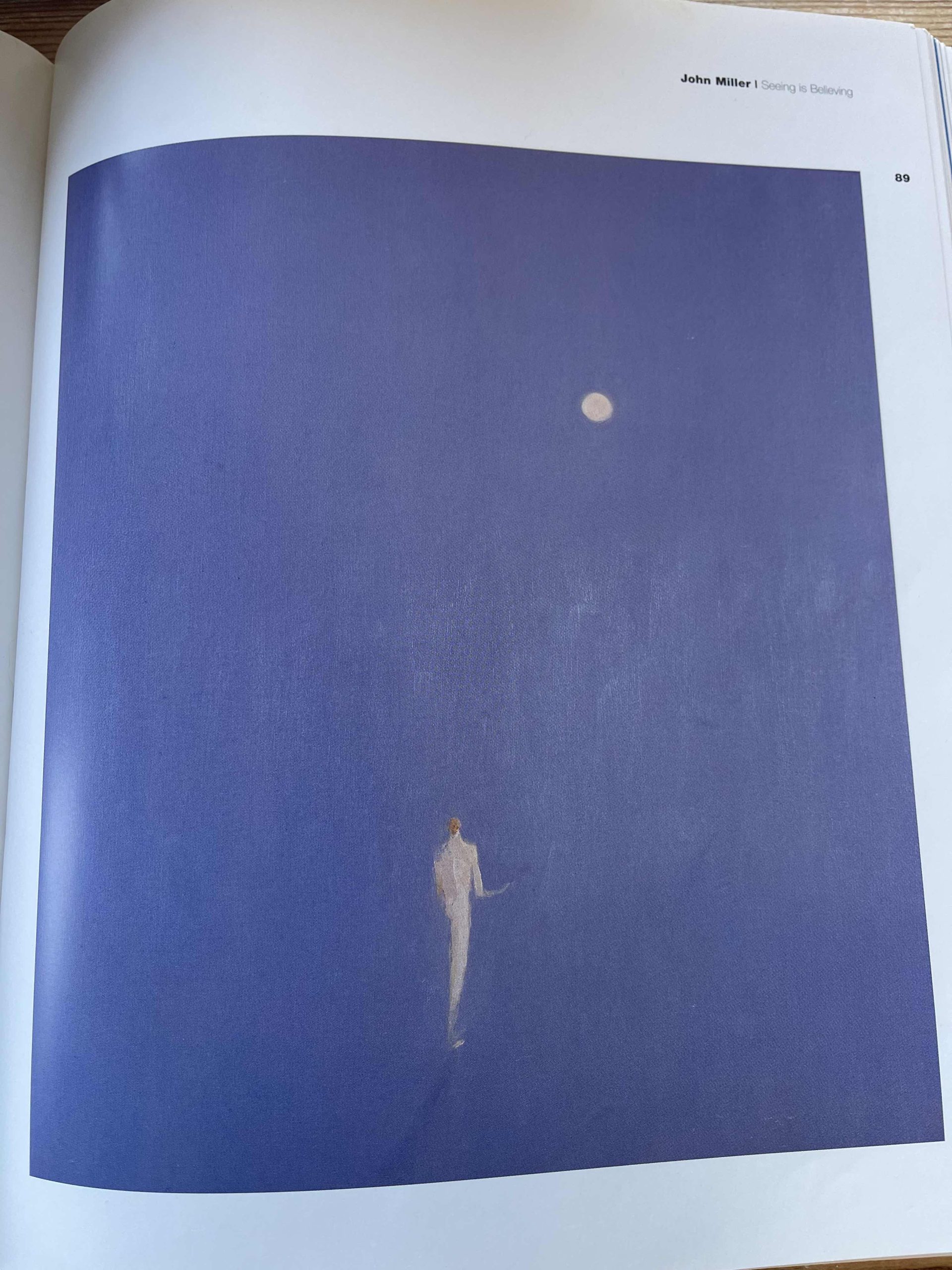
Along with this Translation by John Miller of St Francis of Assisi’s “The Canticle of Brother Sun”
An extract:
All praise to Thee, my Lord, for all creation
And first, my Lord, for Brother Sun;
Who brings the day; and for the light you give to us through him.
How beautiful he is, how radiant and splendid.
How wonderfully he bears your likeness.
All praise, my Lord, to Thee for Sister Moon and the Stars;
In the heavens you made them,
All bright and precious and fair.
All praise, my Lord for Brothers, Wind and Air
and fair or stormy, all the weather’s moods,
By which you cherish all that you have made.
All praise to you, my Lord, for Sister Water,
So precious, useful, lowly and pure.
All praise be yours, my Lord, for Brother Fire
Through whom you brighten up the night
How bright and beautiful he is!
Full of power and strength.
All praise, my Lord, for Sister Earth, our Mother,
Who sees us in her sovereignty and produces Fruits and coloured Flowers and Herbs.
All praise, my Lord, be yours for Sister Death from whose embrace no mortal can escape.
Happy are those to endure in peace,
By You, Most High, they will be crowned.
Saint Francis of Assisi
Translation by John Miller
Recognition and Influence
By the 1990s, John Miller’s work had achieved widespread acclaim, marking a new phase in his career. His paintings were exhibited in leading galleries in London and across the UK, and he became one of Britain’s best-selling artists.
During this decade, a significant boom in the popularity of affordable, limited-edition art prints swept through the UK, fueled by increased interest in home decorating and collecting. This broader cultural trend enabled reproductions of Miller’s beach scenes to adorn homes across the country, making his luminous style not only widely appreciated in galleries but also easily accessible in living spaces.
As a result, his style was widely imitated and became synonymous with the gentle radiance of contemporary Cornish art. Miller’s influence extended beyond the art market. He played a role in the revival of interest in Cornish art, helping to link the modernist traditions of St Ives with the popular imagination. He also became a mentor to younger artists, offering advice, encouragement, and support.
However, not all critics unanimously embraced Miller’s widespread popularity. Some art historians questioned whether the commercial appeal of his prints risked overshadowing the more complex and challenging traditions of Cornish modernism. For example, the critic Eleanor Davies observed that while Miller succeeded in making Cornish landscapes accessible to a wide audience, his approach sometimes “smoothed away the wildness and ambiguity” that earlier artists had explored. In contrast, supporters like Paul Redfern, curator at the Newlyn Art Gallery, argued that “Miller brought the soul of Cornwall to the forefront, inviting people from all walks of life to experience its beauty and mystery through his vision.” This lively debate over his work underscored how Miller sparked passionate responses from both sides. Nonetheless, even those who offered such critiques have acknowledged Miller’s technical skill and the sincere emotional connection that continues to resonate with viewers.
Despite his commercial success, Miller remained committed to his artistic vision. He resisted trends and fashions, preferring to explore the nuances of light, place, and memory. His paintings continued to evolve, becoming increasingly refined and atmospheric in his later years.
Legacy and Continuing Impact
John’s work is extremely popular. It is still not so unusual to find a John Miller seascape hung up on the back wall of a soap show such as Coronation Street, or a china mug at a local coffee shop. He has had many imitators, but none can quite grasp the pure perspective and simple subtlety that he captured.
John Miller passed away in 2002, leaving behind a luminous gallery of coastal dreams. Today, his work is held in private collections and public institutions, and his beach scenes remain instantly recognisable.
Where you can purchase and see Miller’s Work: If you would like to see John Miller’s Famous “Cornubia, Land of the Saints” whilst you are in Cornwall, it is on display in Truro Cathedral.
If you are interested in either going to an Exhibition of John Miller’s work or purchasing an original John Miller painting, Messum’s (David Messum Fine Art) now represent John Miller’s Estate: https://www.messums.com/artists/view/49/John_Miller
Messum’s have also published this comprehensive catalogue https://s3-eu-west-1.amazonaws.com/messums/cat_pdfs/John_Miller_2021_COMPLETE.pdf
Beach Pads
Beach Pads was conceived as a creative response to the allure and tranquility of the Cornish seaside, with Miller’s paintings serving as both inspiration and aesthetic touchstone for the venture. Beach Pads began as a collection of luxury coastal properties in Cornwall, designed to encapsulate the essence of the region’s natural beauty, qualities celebrated in Miller’s art.
The project’s founders, admirers of Miller’s work, sought to create holiday homes that would offer guests an experience akin to stepping into one of Miller’s paintings. For many visitors, the atmosphere strikes immediately on arrival: the hush of early morning, sunlight spilling across pale wood floors, and the soft hiss of waves carrying through an open window as seabirds wheel overhead. The salt-laced breeze mingles with the scent of wildflowers and distant dunes, inviting guests to linger in quiet awe. Rather than simply providing light, space, and serenity in abstract terms, every detail is intended to immerse guests in the luminous tranquility that defined Miller’s beach scenes.
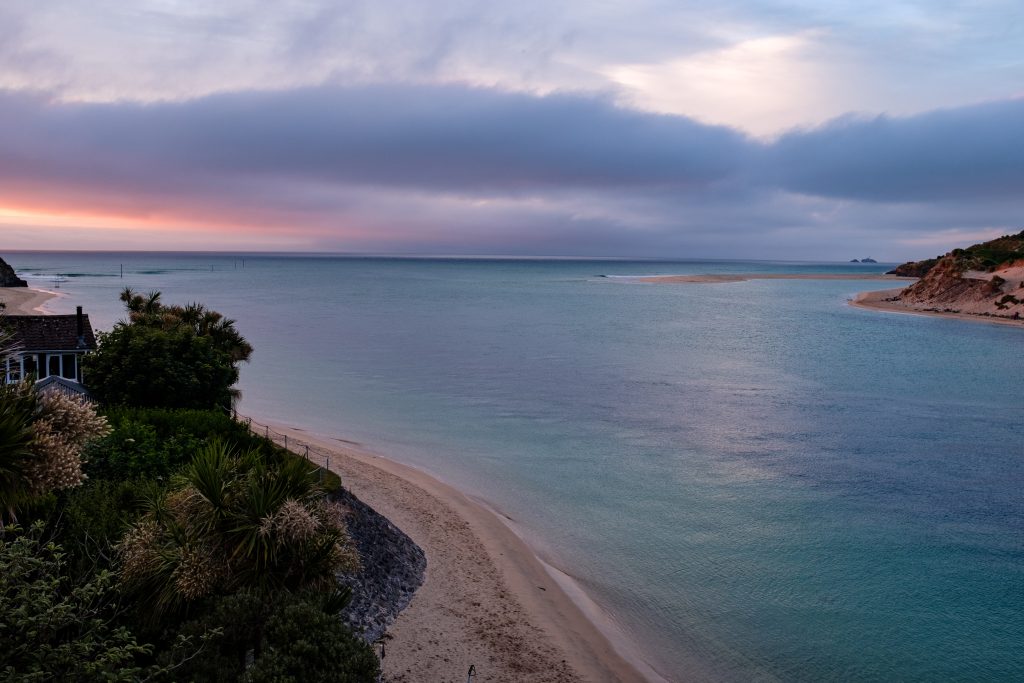
Guests and residents are thus surrounded by the very scenes that inspired Miller for decades, from expansive beaches to azure waters and the distinctive Cornish light. These properties also serve as immersive galleries, spaces where art and environment exist in constant dialogue. The properties have become sought-after retreats for art lovers and those wishing to engage closely with the spirit of Cornwall.
Might you be tempted to step into this living canvas yourself and experience the world as Miller saw it?
Today, that sense of peaceful detachment has become even more significant. Modern visitors often seek a digital detox—a break from the constant noise of screens, schedules, and updates. In experiencing the tranquility Miller painted, guests at his beloved Home and Art Studio at Beach Pads in Lelant can rediscover stillness, clarity, and a renewed connection to themselves. Here, the art does more than depict serenity: it offers a much needed respite and encourages visitors to find their own moments of reflection, away from the distractions of modern life.
Beach Pads allows guests to experience what inspired John Miller and to see his artistic ideals translated into three dimensional space, broadening the impact of his work. At Beach Pads, Miller’s input resonates with visitors on both emotionaland aesthetic levels. The location remains a testament to his artistic philosophy, attracting guests who seek not only thephysical beauty of Cornwall but also the serenity and inspiration that Miller’s art embodies.
Each year, Beach Pads welcomes many guests, often international travellers visiting to stay at John Miller’s former home and studio. This impressive level of ongoing engagement, along with an annual rise in new and returning visitors, demonstrates the lasting appeal of Miller’s vision today.
As one recent visitor described, “Waking up to the same light and views Miller painted, I felt a sense of calm I’ve rarely experienced on holiday.” Another guest wrote in the visitors’ book, “Being here is like stepping into one of his paintings—the stress just melts away.” This first-hand testimony underscores how the partnership stands as a model for how art can shape and elevate the experience of place, ensuring that Miller’s vision continues to touch lives far beyond the walls of galleries or the boundaries of Lelant. The continued popularity of Miller’s work speaks to its universal appeal. His paintings evoke feelings of peace, nostalgia, and longing for simpler times. For many, they offer an escape from the pressures of modern life—a window onto a world of light, space, and endless possibility.
Miller reflected in his own words here:
One morning recently I was sitting on the balcony overlooking Bay and watched a yacht leave the harbour. At a certain distance it fitted neatly into a small triangle of rigging at the top of the mast of a similar yacht still in the harbour. I was fascinated and astounded by this. I knew that this phenomenon could quite easily be explained, but I didn’t want to engage in that. As the yacht travelled away and became small enough to fit into the top triangle of rigging of the stationary yacht I knew that I had received a revelation of time and space which had a significance beyond analysis.
John Miller’s life and art were inextricably linked to Lelant and the Cornish coast. Through his luminous paintings, he captured the spirit of place and shared it with the world. His vision, rooted in observation, memory, and love, continues to inspire artists and viewers alike.
To this day, as the sun sets over Porthkidney Sands and the last light lingers on the water, it is easy to imagine Miller at his easel, letting the glow of the Cornish evening slip gently onto his canvas. That quiet, golden hour endures in his paintings, a promise that as long as the tide washes the Lelant shore and light dances across the bay, the art of John Miller will never truly fade.
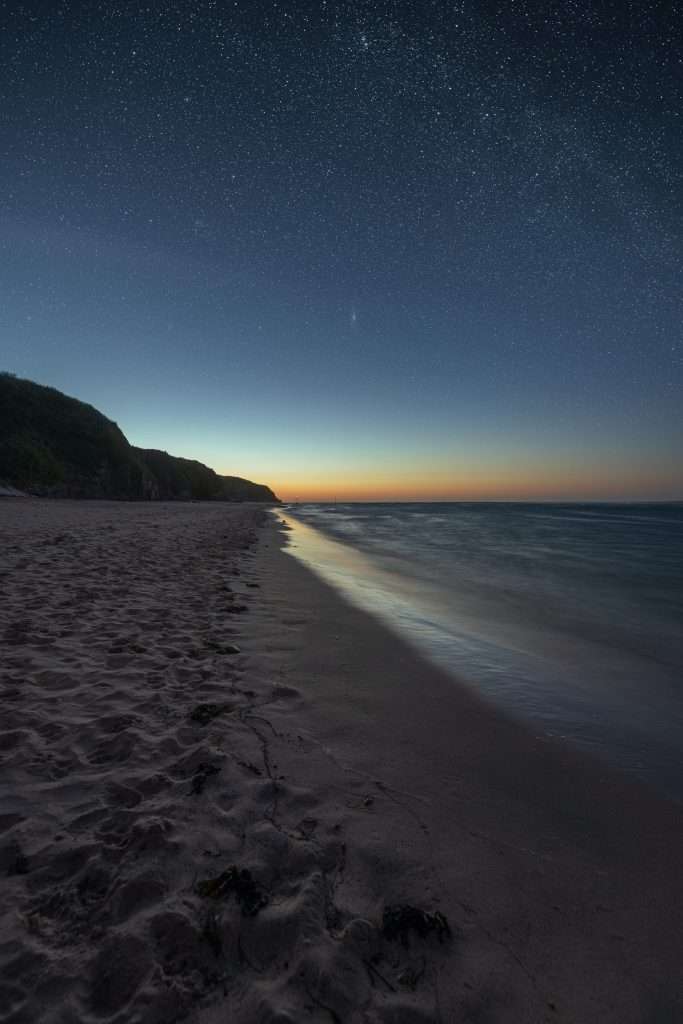
Find your own golden hour in Miller’s Cornwall.
Today, guests can book to stay at a location that was not only important to John Miller but also inspired the close friendship and creative exchanges between Miller and David Cornwell (John le Carré), making it a truly special retreat for lovers of art, literature, and Cornish heritage.